Electronics and Communication Circuit Diagram What is a Bipolar Junction Transistor (BJT)? A bipolar junction transistor( BJT) is a directly junctioned electronic device generally applied in revision and switching circuits. It's composed of alternate layers formed by either P- type or N- type semiconductors and comprises three regions: the emitter, the base, and the collector.
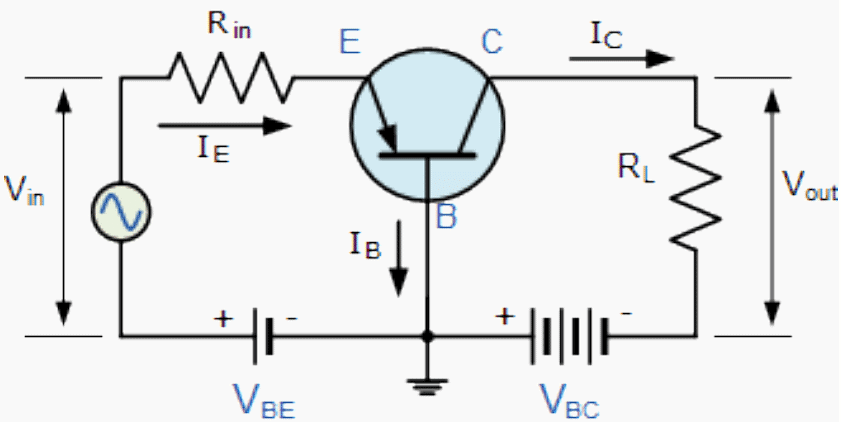
In order for a transistor to properly function as a current regulator, the controlling (base) current and the controlled (collector) currents must be going in the proper directions: meshing additively at the emitter and going in the direction of the emitter arrow symbol. RELATED WORKSHEET: Bipolar Junction Transistor (BJT) Theory Worksheet

Understanding Bipolar Junction Transistor (BJT): A Beginner's Guide Circuit Diagram
What is a Bipolar Junction Transistor (BJT) and how does it work? The transistor is classically defined as a three-terminal semiconductor device that operates as a linear amplifier, oscillator, or digital switch. To intuitively understand transistors, you will need to build a circuit. Start by building the beginner transistor circuits In the second installment of this series, we will explain Vceo (collector-emitter voltage) and Vces (collector-emitter breakdown voltage).. Collector-emitter voltage Vceo. Vceo is the breakdown voltage when the depletion layer that spreads from the base to the emitter and the depletion layer that spreads from the EB junction to the base collide. (See Figure 5 on the left below) How To Choose a Transistor. The NPN transistor is the most common of the Bipolar Junction Transistors (BJT).But there is another one called a PNP transistor that works the same way, just that all the currents are in the opposite direction.. When choosing a transistor, the most important thing to keep in mind is how much current the transistor can support.

Variability in Current Gain: β can vary widely among transistors of the same type. Saturation Mode: In saturation, R CE approaches zero, causing V CE to be almost zero. Frequently Asked Questions 1. What is the purpose of using a BJT in a circuit? A BJT can act as an amplifier to increase signal power or as a switch to control circuit flow. 2.
PDF Transistors: Bipolar Junction Transistors (BJT) Circuit Diagram
device and it comes in two general types: the Bipolar Junction Transistor (BJT) and the Field Effect Transistor (FET). Here we will describe the system characteristics of the BJT configuration and explore its use in fundamental signal shaping and amplifier circuits. The BJT is a three terminal device and it comes in two different types. The npn
